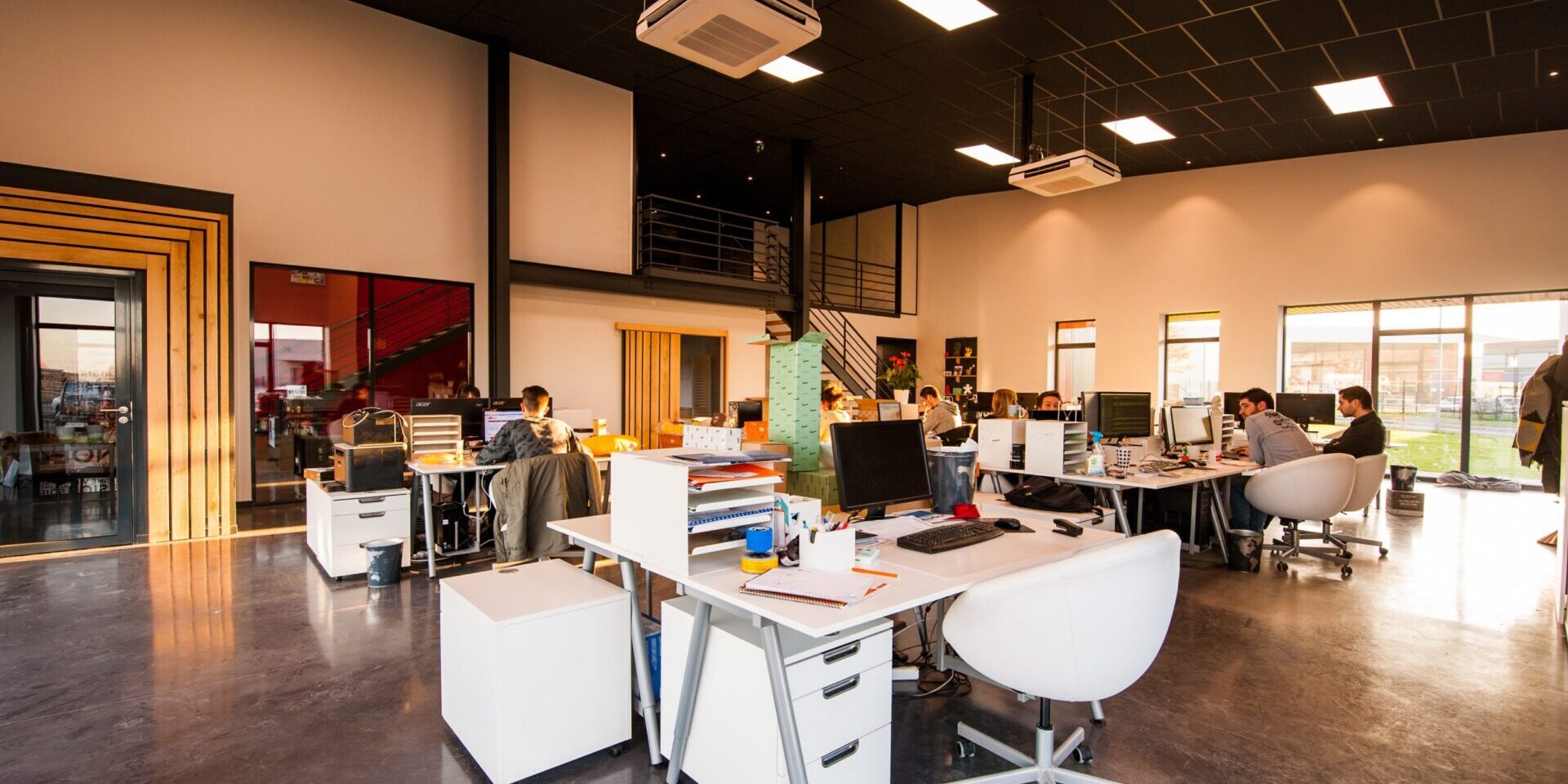
The large-scale outbreak of COVID-19 has forced companies to change the way they operate. Many organizations went full remote or implemented hybrid models in which employees work from home on multiple days a week, while many that require on-premise workforce had to adopt protective measures to safeguard their critical workforce. These experiments with new working styles have shown us that there are ways to continue operations in other ways than the traditional. How will this new understanding translate in the world after COVID-19? What will offices after COVID-19 look like?
Remote or On-Site
Before COVID-19, remote working was limited to a small number of people, even though it is a working style compatible with a lot more job functions. The traditional on-site working style was dominant across geographies and industries. With lockdowns across the globe, this was changed with many employees who can work from home being allowed to do so. Meanwhile, there are still many jobs that require on-site work, most frequently seen in the manufacturing industry.
Remote working has many advantages for both employees and employers: the eroding geographic barriers allow employers to pick talent from a much larger pool and avoiding overhead costs associated with renting and maintaining an office space , meanwhile many employees say flexible work hours allow them to avoid loss of time and increase their productivity.
On the other hand, supporters of on-site working argue that in-person interaction with colleagues is good for morale and company culture, and that it allows a greater degree of collaborative innovation not possible with online communication tools, which many believe is essential for growth.
Hybrid styles are gaining popularity as lockdowns are lifted and economies start recovery, and many believe that the hybrid working style is a realistic replacement for the traditional on-site style in the long term. It achieves a balance between the advantages of flexible working hours with the social aspects of on-premise work, and can be sustainable in the post-COVID world of business. However, at least in the foreseeble future, workplaces will continue to exist as there are still many job functions that require on-premise work.
Designing the Offices of the Future
If the main purpose of having an office is the collaborative environment, organizations should strive to create workspaces specifically designed to support the kinds of interactions that cannot happen remotely. In fact, before the pandemic, many companies were opting for offices with open layouts rather than cubicles and common areas where people can interact and exchange ideas. However, the lasting effects of COVID-19 pandemic will reverse this trend as offices after COVID-19 become more parititoned and occupants are assigned their own space for more isolation. The big, high density, highly socialized HQ model will be dropped for the near future, with companies going for smaller, more dispersed arrangement with sattelite offices with lower capacities. The satellite model creates a collaborative working environment without the risk of
Companies worldwide are experimenting with new office designs that will define the the workplace of the future. Many are moving away from urban HQs and replacing it with more dispersed working spaces. Amazon recently announced it is investing $1.4 billion in building remote working spaces in smaller cities. Facebook has allowed employees to work from wherever they want but intends to open satellite offices where employees can choose to work from.
Intelligence Systems for Safety
Smart offices have used intelligent systems like sensors and location beacons for efficiency purposes for a while. However, in offices after COVID-19, these systems will become more important for safety reasons. During the pandemic, using sensors for managing the occupancy of spaces to control crowds, using wearables to warn occupants when they break social distance and record contact data for accurate filiation, technologies that remove touch points like self flushing toilets and automatic lighting and automation of functions like cleaning with robots will become more widespread.
After the pandemic, this trend of automation will continue and systems will be utilized for both efficiency and safety. Wearables with location finding properties can be used for efficient use of resources like air conditioning and heating, managing the occupancy in common spaces like the cafeteria and managing queues or quickly locating employees or visitors if an emergency occurs.
The post-pandemic world will see a reversal of many pre-pandemic trends in terms of workplaces. However, this challenge has created opportunities to think of innovative new ways of improving the traditional styles of working. Hybrid working models, satellite offices, smart infrastructures thar are currently being adopted by many companies will give opportunities for businesses to review their operations and improve them.
Contact us to learn more about our COVID-19 solution Safe Steps.